


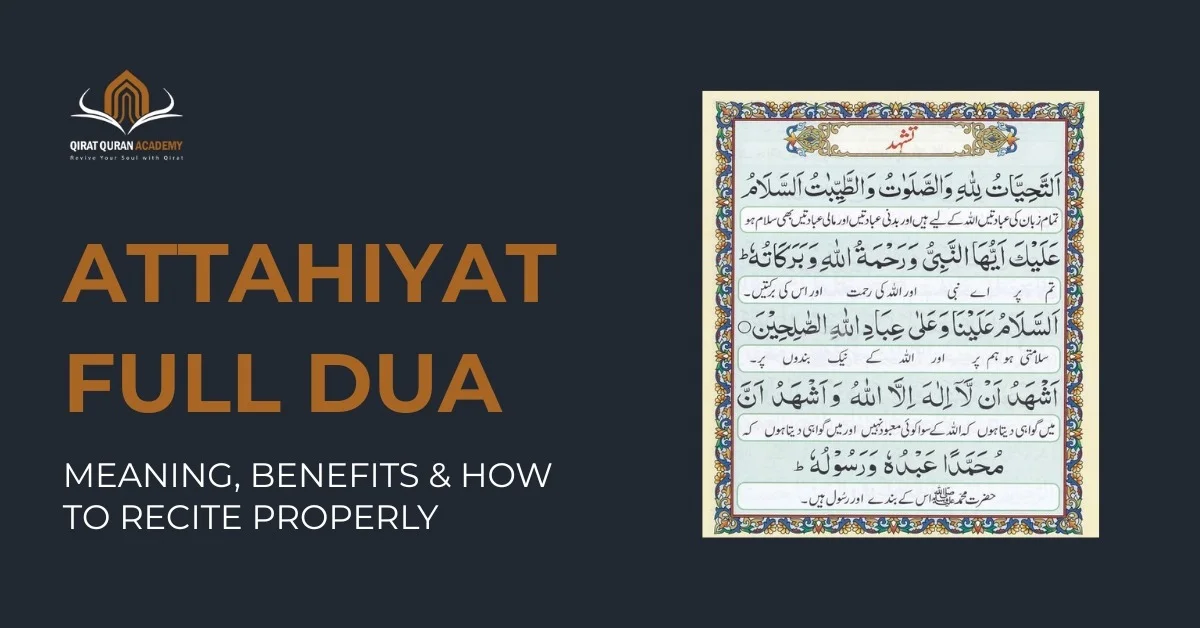
Have you ever wondered about the beautiful words we recite in Salah right after sitting? That’s the Attahiyat full dua — a fundamental part of Muslim prayers that carries deep spiritual meaning. For many, it’s more than just a ritual; it’s a moment to connect with Allah, seek blessings for the Prophet ﷺ, and find inner peace.
Whether you are a beginner or someone seeking to deepen your understanding, learning the Attahiyat full dua correctly is essential. This guide will break it down in a simple, human-friendly way so that you can recite it with confidence and understanding.
What is Attahiyat Full Dua?
The Attahiyat full dua is a supplication recited during Salah (prayer), especially when sitting after the first two units (rak’ahs) and at the end of prayer before concluding with Tasleem. It is also referred to as “Tashahhud” and serves as a way of sending peace and blessings upon the Prophet Muhammad ﷺ.
Importance of Attahiyat in Salah
Why is it so important? Simply put, the Attahiyat full dua acts as a bridge between your daily actions and spiritual mindfulness. Reciting it properly ensures that your prayer is complete and that you’re invoking blessings not just for yourself, but for the Prophet ﷺ and all believers.
Meaning of Attahiyat Full Dua
Understand the meaning of Attahiyat Full Dua and the profound message it conveys in your prayers.
Word-by-Word Explanation
Understanding the meaning behind every phrase of the attahiyat full dua is crucial. For instance:
- “At-tahiyyatu lillahi…” translates to “All greetings, prayers, and goodness are for Allah.”
- “Assalamu ‘alayka ayyuhan-nabiyyu…” means “Peace be upon you, O Prophet.”
- “Wa rahmatullahi wa barakatuh” adds “and the mercy of Allah and His blessings.”
Each segment holds layers of spiritual significance, reminding us of our duties towards Allah and our Prophet ﷺ.
Understanding the Message Behind the Dua
The dua is not just a formality; it’s a humble expression of devotion. By reciting it, you acknowledge Allah’s supremacy, honor the Prophet ﷺ, and seek mercy and blessings in your life. Imagine it as a spiritual conversation, connecting your heart to the Divine.
Benefits of Reciting Attahiyat Full Dua
Discover the spiritual, emotional, and faith-strengthening benefits of reciting Attahiyat Full Dua regularly.
Spiritual Benefits
Reciting the attahiyat full dua strengthens your bond with Allah. It is a moment of reflection where your mind focuses solely on worship, helping you grow spiritually and maintain mindfulness throughout your day.
Psychological and Emotional Benefits
Believe it or not, regular recitation can calm your mind, reduce stress, and bring emotional clarity. When you pronounce each word with understanding, it acts like a meditation, soothing the heart and uplifting the spirit.
Strengthening Faith and Connection with Allah
Every attahiyat full dua recitation reinforces your faith. It’s like planting seeds of devotion that grow into a stronger, more conscious connection with your Creator.
When to Recite Attahiyat Full Dua
Learn the proper times to recite Attahiyat Full Dua during Salah and other recommended moments.
During Salah (Prayer)
You will recite this dua after the first two rak’ahs in longer prayers and before concluding your Salah. It’s an essential part of the Tashahhud sequence.
Other Recommended Times
Some scholars encourage reciting parts of the attahiyat full dua even outside formal prayers, as a reminder of Allah’s blessings and mercy in daily life.
Step-by-Step Guide to Reciting Attahiyat Full Dua
Follow this step-by-step guide to correctly recite Attahiyat Full Dua with proper pronunciation and understanding.
Preparing Yourself for Recitation
Before reciting, ensure you are in a clean, quiet place and mentally focused. A little preparation goes a long way in improving your connection with the words.
Pronunciation Tips for Accurate Recitation
For beginners, correct pronunciation can be tricky. Break the dua into small parts, repeat slowly, and use audio resources from reliable Quranic teachers. This helps your recitation sound natural and accurate.
Common Mistakes to Avoid
Avoid skipping parts or reciting too quickly. Focus on understanding, not just memorization. Mispronunciation may change the meaning, so take your time to learn properly.
Transliteration of Attahiyat Full Dua
Learn the easy transliteration of Attahiyat Full Dua to recite it accurately even if you don’t know Arabic.
Easy Guide for Beginners
Here’s a simple transliteration:
At-tahiyyatu lillahi, was-salawatu wat-tayyibatu, assalamu ‘alayka ayyuhan-nabiyyu wa rahmatullahi wa barakatuh…
How to Read Without Knowing Arabic
Even if you don’t know Arabic, reading this transliteration daily and following along with an audio guide can help you memorize quickly. Pairing visual reading with listening enhances retention.
Tafsir (Explanation) of Attahiyat Full Dua
Explore the tafsir of Attahiyat Full Dua to understand its deep spiritual meaning and significance in prayer.
Spiritual Significance
The dua acknowledges Allah as the source of all goodness, reinforces respect for the Prophet ﷺ, and encourages humility in worship. It’s a beautiful reminder that prayer is a complete act of devotion.
Insights from Scholars
Many scholars emphasize understanding the meaning rather than rote memorization. Reflecting on each phrase during prayer enhances sincerity and presence of heart.
Attahiyat Full Dua in Different Schools of Thought
Explore how Atahiyat Full Dua is recited across different Islamic schools of thought and understand minor variations.
Hanafi, Shafi’i, Maliki, and Hanbali Perspectives
While the core meaning remains consistent, slight differences in pronunciation and sequence exist across Islamic schools. It’s important to follow the method taught by your local masjid or teacher.
Minor Differences in Recitation
Some schools may add or omit certain phrases slightly, but all maintain the essence: glorifying Allah and sending blessings on the Prophet ﷺ.
Tips to Memorize Attahiyat Full Dua Easily
Discover effective tips and techniques to easily memorize Atahiyat Full Dua for accurate and confident recitation.
Daily Practice Techniques
Recite it multiple times after Fajr and Maghrib prayers. Repetition is the key. Writing it down can also reinforce memory.
Using Audio and Video Resources
Listening to Quran teachers or online tutorials from platforms like qiratquran.com can accelerate your learning while ensuring correct pronunciation.
Common Questions About Attahiyat Full Dua
Get answers to the most common questions about Atahiyat Full Dua, its recitation, meaning, and benefits.
Is it mandatory to recite in every prayer?
Yes, reciting the attahiyat full dua is part of completing the Tashahhud, which is mandatory in all Salah.
Can it be recited in private supplications?
Absolutely! While it is primarily part of Salah, reciting it outside prayer as a reminder of Allah’s blessings is highly recommended.
Frequently Asked Questions (FAQs)
It means all greetings, prayers, and goodness are for Allah, sending peace and blessings to the Prophet ﷺ.
Break it into small parts, recite daily, and listen to audio recitations for correct pronunciation.
Yes, minor variations exist, but the core meaning remains the same across Hanafi, Shafi’i, Maliki, and Hanbali schools.
Yes, using transliteration and audio guidance helps beginners recite accurately while learning the meaning.
It strengthens faith, brings inner peace, and enhances mindfulness and connection with Allah during prayer.
Conclusion
The attahiyat full dua is more than just a prayer; it is a spiritual anchor, a source of calm, and a bridge connecting you to Allah and the Prophet ﷺ. By learning its meaning, benefits, and proper recitation, you enrich your Salah and enhance your daily spiritual life. Start today, recite with understanding, and experience the peace it brings to your heart.
