


Islam is built upon strong foundations, and Kalima 4 is one of those pillars that strengthens a believer’s heart. Every Kalima teaches a different aspect of faith, but Kalima 4 focuses purely on Tauheed—the oneness of Allah.
Think of it like resetting your compass. Whenever life pulls you in different directions, 4th Kalima brings you back to the center: Allah alone is worthy of worship.
What Is Kalima 4? (Kalima Tauheed)
4th Kalima is known as Kalima Tauheed, which literally means the declaration of Allah’s oneness.
Why Kalima 4 Is Called Kalima Tauheed
The word Tauheed means believing that:
- Allah is One
- Allah has no partners
- No one deserves worship except Allah
This Kalima completely rejects shirk (associating partners with Allah) and purifies a believer’s faith.
Arabic Text of Kalima 4
The Arabic text of Kalima 4 preserves the original, authentic wording revealed in Islamic tradition, ensuring accurate pronunciation, deep meaning, and a strong connection to the belief in the oneness and greatness of Allah.
Correct Arabic Script
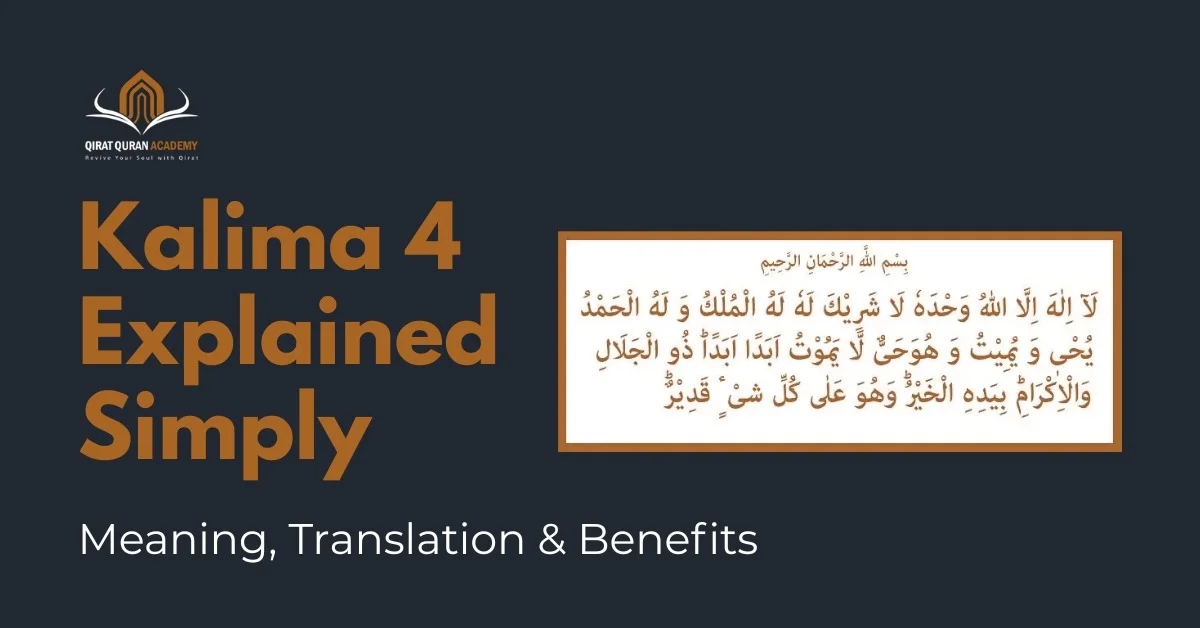
لَا إِلٰهَ إِلَّا اللّٰهُ وَحْدَهُ لَا شَرِيكَ لَهُ، لَهُ الْمُلْكُ وَلَهُ الْحَمْدُ، يُحْيِي وَيُمِيتُ، وَهُوَ حَيٌّ لَا يَمُوتُ، أَبَدًا أَبَدًا، ذُو الْجَلَالِ وَالْإِكْرَامِ، بِيَدِهِ الْخَيْرُ، وَهُوَ عَلَىٰ كُلِّ شَيْءٍ قَدِيرٌ
Kalima 4 Translation in English
The English translation of 4th Kalima helps believers clearly understand its powerful message of Allah’s oneness, sovereignty, and eternal authority in simple, meaningful words.
Simple Word-by-Word Meaning
“There is no god except Allah. He is One. He has no partner. His is the kingdom and all praise is for Him. He gives life and causes death. He is Alive and never dies. Forever and ever. Owner of Majesty and Honor. All goodness is in His hand, and He has power over everything.”
Simple, yet incredibly powerful.
Understanding the Deep Meaning of 4th Kalima
4th Kalima isn’t just to be memorized—it’s meant to be felt.
Belief in the Oneness of Allah
This Kalima removes fear from the heart. When you truly believe Allah controls everything, worries start to shrink.
Rejection of All False Gods
Why This Matters Today
In today’s world, “false gods” don’t always look like idols. They can be:
- Money
- Status
- People’s approval
Kalima 4 reminds us not to bow to anything except Allah.
Spiritual Importance of Kalima 4 in Daily Life
Reciting Kalima 4 daily is like polishing the heart. It:
- Strengthens iman
- Protects from doubts
- Brings peace during anxiety
Just like food feeds the body, Kalima 4 feeds the soul.
Benefits of Reciting Kalima 4
Reciting Kalima 4 strengthens faith, purifies the heart from shirk, brings inner peace, and earns immense spiritual reward by reaffirming complete trust in Allah alone.
Spiritual Benefits
- Strengthens belief in Tauheed
- Cleanses the heart from shirk
- Increases closeness to Allah
Mental and Emotional Benefits
- Reduces stress
- Builds trust in Allah
- Creates inner calm
Benefits in the Hereafter
- Heavy reward on the Day of Judgment
- Protection from punishment
- A means of entering Jannah (by Allah’s mercy)
Purity Before Worship: Connection of Kalima 4 With Wudu
Islam emphasizes cleanliness before worship, and that’s where understanding how to do wudu becomes essential.
Why Physical Purity Matters in Islam
Wudu isn’t just washing—it’s spiritual preparation. It washes away minor sins and prepares your heart for remembrance.
How to Do Wudu Before Reciting Kalima 4
While Kalima can be recited anytime, reciting it in a state of wudu:
- Increases focus
- Enhances reward
- Builds discipline in worship
How to Do Wudu Step by Step (Beginner-Friendly Guide)
If you’re new to Islam or revising the basics, here’s a simple guide on how to do wudu correctly.
Intention (Niyyah)
Make a silent intention in your heart to perform wudu for Allah.
Washing Hands, Mouth, Nose
- Wash hands 3 times
- Rinse mouth 3 times
- Clean nose 3 times
Washing Face and Arms
- Wash entire face 3 times
- Wash arms up to elbows 3 times (right then left)
Masah of Head and Washing Feet
- Wipe head once
- Clean ears
- Wash feet up to ankles 3 times
Now you are physically and spiritually ready to remember Allah through Kalima 4.
Best Time and Situations to Recite Kalima 4
You can recite Kalima 4:
- After Fajr and Maghrib
- During stress or fear
- Before sleeping
- After completing wudu
Consistency matters more than timing.
Teaching Kalima 4 to Children and Beginners
Make it easy:
- Break it into parts
- Explain meaning with stories
- Encourage recitation after wudu
- Be patient and gentle
Children learn best when faith feels loving, not forced.
Common Mistakes While Reciting Kalima 4
- Rushing without understanding
- Incorrect pronunciation
- Ignoring its meaning in daily actions
Remember, quality matters more than quantity.
Frequently Asked Questions (FAQs)
Kalima 4 emphasizes absolute belief in Allah’s oneness and rejects all forms of shirk.
Yes, but reciting it after wudu increases focus and spiritual reward.
Daily recitation is recommended, especially in the morning and evening.
While not obligatory like Salah, memorizing it strengthens faith and understanding of Tauheed.
Because wudu is the foundation of worship, helping maintain cleanliness, discipline, and spiritual readiness.
Conclusion
Kalima 4 is a powerful declaration of faith that reconnects a believer with Allah’s oneness, authority, and mercy. When combined with physical purity through how to do wudu, it becomes a complete act of worship—clean body, clear heart, and focused soul.
At qiratquran.com, our goal is to make Islamic learning simple, practical, and spiritually uplifting. Whether you’re learning Kalimas, Quran, or the basics of worship, remember: small steps taken with sincerity lead to great rewards.
