


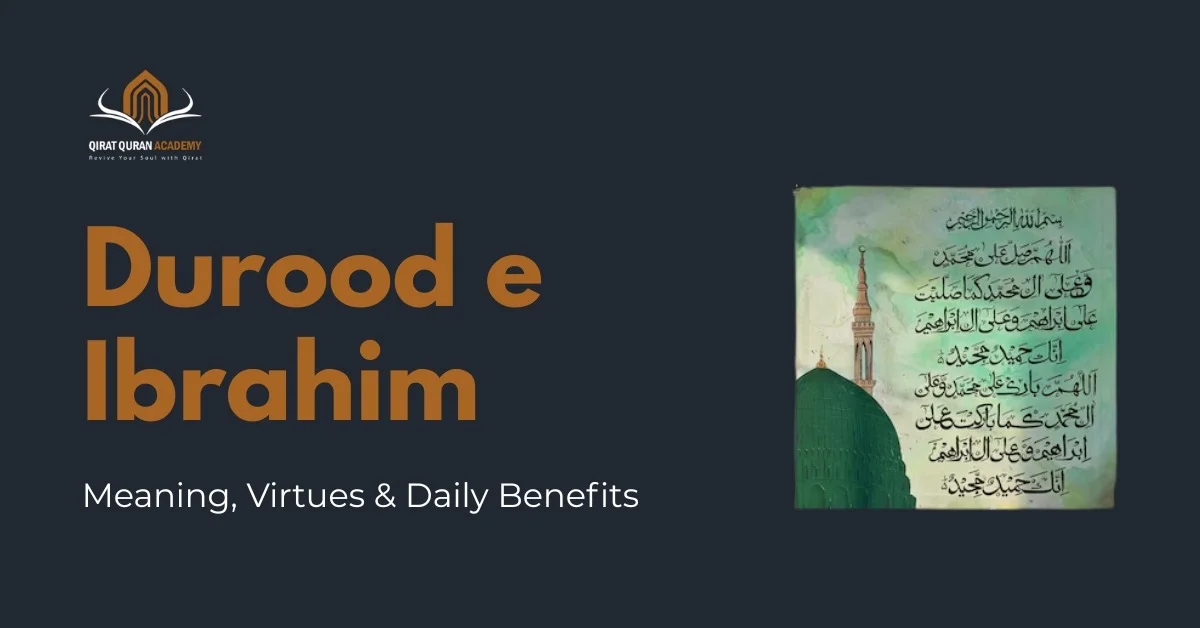
When we talk about powerful supplications in Islam, one name shines brighter than most — Durood e Ibrahim. It’s not just a few Arabic words recited in prayer; it’s a spiritual bridge connecting believers to Allah, His beloved Prophet Muhammad ﷺ, and the legacy of Prophet Ibrahim عليه السلام.
If you’ve ever wondered why this durood holds such a special place in Islam, what it truly means, and how it can transform your daily life — you’re in the right place. Let’s explore Durood e Ibrahim in a simple, heartfelt, and deeply engaging way.
Introduction to Durood e Ibrahim
Every Muslim recites Durood Ibrahim daily, often without even realizing its depth. It is an essential part of Salah, recited in the final sitting of prayer. But here’s the thing — many of us recite it out of habit, not understanding its beauty or power.
Think of Durood e Ibrahim like a master key 🔑 — a key that unlocks blessings, peace, acceptance of duas, and closeness to Allah. Once you understand it, your prayer will never feel the same again.
What Is Durood e Ibrahim?
Durood Ibrahim is a blessed supplication in Islam where Muslims ask Allah to send mercy, peace, and honor upon Prophet Muhammad ﷺ and his family, as He did for Prophet Ibrahim عليه السلام.
Literal Meaning of Durood
The word “Durood” means to send blessings, mercy, and peace. In Islamic terms, it refers to sending Salawat upon Prophet Muhammad ﷺ.
When we recite durood, we are essentially asking Allah:
“O Allah, shower Your mercy, honor, and blessings upon Your beloved Prophet.”
Simple, yet incredibly powerful.
Why It Is Called “Durood e Ibrahim”
This specific durood is called Durood e Ibrahim because it mentions Prophet Ibrahim عليه السلام and his family alongside Prophet Muhammad ﷺ.
It beautifully connects two of the greatest prophets, reminding us that Islam is a continuation of divine guidance — not a new path, but a perfected one.
Complete Arabic Text of Durood e Ibrahim
It is the authentic Arabic supplication taught by Prophet Muhammad ﷺ, recited in Salah to send blessings upon him and the family of Prophet Ibrahim عليه السلام.
Arabic Text
اللَّهُمَّ صَلِّ عَلَىٰ مُحَمَّدٍ وَعَلَىٰ آلِ مُحَمَّدٍ كَمَا صَلَّيْتَ عَلَىٰ إِبْرَاهِيمَ وَعَلَىٰ آلِ إِبْرَاهِيمَ إِنَّكَ حَمِيدٌ مَجِيدٌ
اللَّهُمَّ بَارِكْ عَلَىٰ مُحَمَّدٍ وَعَلَىٰ آلِ مُحَمَّدٍ كَمَا بَارَكْتَ عَلَىٰ إِبْرَاهِيمَ وَعَلَىٰ آلِ إِبْرَاهِيمَ إِنَّكَ حَمِيدٌ مَجِيدٌ
English Translation
“O Allah, send blessings upon Muhammad and upon the family of Muhammad, as You sent blessings upon Ibrahim and the family of Ibrahim. Indeed, You are Praiseworthy and Glorious.
O Allah, bless Muhammad and the family of Muhammad as You blessed Ibrahim and the family of Ibrahim. Indeed, You are Praiseworthy and Glorious.”
Simple Explanation in Easy Words
In simple terms, when you recite Durood Ibrahim, you are asking Allah to:
- Honor Prophet Muhammad ﷺ
- Elevate his status
- Bless his family
- Grant him the same everlasting honor given to Prophet Ibrahim عليه السلام
That’s not small — that’s monumental.
Importance of Durood e Ibrahim in Islam
Durood Ibrahim holds great importance in Islam as it is a Sunnah supplication recited in every Salah, strengthening a believer’s connection with Allah and Prophet Muhammad ﷺ.
Connection With Prophet Muhammad ﷺ
The Prophet ﷺ himself taught this durood to his companions. That alone speaks volumes. It’s not something scholars invented later — it came directly from the Sunnah.
When you recite it, you are following the exact words approved by the Prophet ﷺ.
Link With Prophet Ibrahim عليه السلام
Prophet Ibrahim is known as Khalilullah (Friend of Allah). Mentioning him in this durood shows:
- The continuity of divine message
- The honor of righteous lineage
- The importance of family in faith
It’s like standing in a line of blessed souls stretching back through history.
Durood e Ibrahim in Salah (Prayer)
Durood e Ibrahim is recited in the final sitting of Salah, completing the prayer by sending blessings upon Prophet Muhammad ﷺ as taught in the Sunnah.
Where It Is Recited in Salah
You recite Durood Ibrahim in the final sitting (Tashahhud) of Salah, after Attahiyyat and before ending the prayer with Salam.
This moment is powerful — your Salah is almost complete, and you seal it with blessings upon the Prophet ﷺ.
Is Salah Complete Without It?
According to many scholars:
- Durood Ibrahim is obligatory (wajib) or highly emphasized (sunnah mu’akkadah) in Salah
- Leaving it intentionally can affect the completeness of prayer
That’s how important it is.
Virtues of Durood e Ibrahim According to Hadith
According to authentic Hadith, reciting Durood e Ibrahim brings immense rewards, forgiveness of sins, and multiplied blessings from Allah upon the believer.
Most Authentic Form of Sending Salawat
There are many forms of durood, but Durood e Ibrahim is considered the most authentic and complete.
Why?
Because it was directly taught by the Prophet ﷺ when companions asked:
“O Messenger of Allah, how should we send blessings upon you?”
This was his answer.
Rewards Mentioned in Ahadith
The Prophet ﷺ said:
- One durood brings ten blessings from Allah
- Sins are forgiven
- Ranks are elevated
Now imagine reciting Durood Ibrahim daily — the rewards multiply beyond imagination.
Daily Benefits of Reciting Durood Ibrahim
Reciting Durood e Ibrahim daily brings peace to the heart, spiritual strength, increased blessings, and greater acceptance of duas in everyday life.
Spiritual Benefits
- Increased closeness to Allah
- Stronger connection with Prophet ﷺ
- Noor (light) in the heart
- Acceptance of worship
It’s like spiritual nourishment — skip it, and your soul feels hungry.
Emotional & Mental Benefits
- Inner peace
- Reduced anxiety
- Comfort during hardships
- Hope in difficult times
Many people describe it as a calming balm for the heart.
Worldly Benefits
- Barakah in time and wealth
- Ease in daily matters
- Protection from unseen harm
- Improvement in relationships
Small act, massive impact.
Best Times to Recite Durood Ibrahim
After Salah
Right after prayer is one of the best times. Your heart is already soft, your focus strong.
On Fridays
Friday is the king of days. Reciting durood abundantly on this day brings special rewards.
During Duas
Start and end your dua with Durood e Ibrahim — it increases the chances of acceptance, like sealing an envelope before sending it.
How Often Should You Recite Durood e Ibrahim Daily?
There is no fixed limit, but reciting Durood Ibrahim consistently every day—even a few times with sincerity—brings lasting spiritual and personal benefits.
Recommended Daily Practice
There’s no fixed limit, but consistency matters more than quantity.
Even:
- 10 times daily
- After every Salah
can transform your spiritual life.
Easy Ways to Make It a Habit
- Recite after Fajr and Isha
- Add it to morning adhkar
- Recite while walking or resting
Make it part of your routine, not a burden.
Common Mistakes People Make While Reciting Durood
However, many people make mistakes like mispronouncing words or reciting without understanding the meaning, which can reduce the spiritual impact of Durood Ibrahim.
Pronunciation Errors
Mispronouncing Arabic words can change meanings. Learning proper tajweed improves both reward and connection.
Neglecting Its Meaning
Reciting without understanding is like reading a letter without opening it. Know what you’re saying — it changes everything.
Why Durood Ibrahim Is Powerful for Acceptance of Duas
Reciting Durood e Ibrahim before and after supplications increases the likelihood of dua being accepted by invoking Allah’s mercy and blessings upon the Prophet ﷺ.
Sunnah Method of Dua
The Prophet ﷺ taught us to:
- Praise Allah
- Send durood
- Make dua
- End with durood
This method is like knocking on the door properly — and being welcomed inside.
Spiritual Wisdom Behind It
Sending blessings first shows humility, love, and respect — qualities that attract divine mercy.
Frequently Asked Questions (FAQs)
It is a special prayer asking Allah to bless Prophet Muhammad ﷺ and his family, just as He blessed Prophet Ibrahim عليه السلام.
It is highly emphasized, and according to many scholars, leaving it intentionally affects the completeness of Salah.
Yes, you can recite it anytime — especially during duas and on Fridays.
It brings Allah’s mercy, forgiveness of sins, peace of heart, and acceptance of supplications.
There’s no fixed number — consistency matters more. Even a few sincere recitations daily are powerful.
Conclusion
Durood e Ibrahim is not just a ritual; it’s a lifeline. It connects heaven and earth, past and present, heart and soul. When recited with understanding, it becomes a source of peace, blessings, and divine closeness.
If there’s one habit worth building for this life and the next — this is it.
